71% of people search online before booking a dental appointment, so your digital presence is now your primary front door. The practices that win aren't just attracting more clicks, they're turning local search intent into calls, self-booked appointments, and patients who fit the services they provide.
Lead generation for dentists has moved beyond referrals, newspaper ads, and a generic homepage with a phone number in the header. Patients search by treatment, urgency, location, insurance, availability, and trust. They compare practices quickly, often from a phone, and abandon any path that makes booking feel uncertain.
That changes the marketing question. Don't ask, “How do we get more traffic?” Ask, “Which patient are we trying to attract, what do they need right now, and can they trust us enough to book without extra friction?” More traffic from the wrong audience creates more administrative work, not a healthier schedule.
Table of Contents
- The Digital Reality of Modern Dental Discovery
- Mastering Local Search and Google Business Profiles
- Paid Advertising Strategies That Actually Fill Chairs
- Turning Attraction Into Trust With Reviews and Content
- The Hidden Power of Patient Retention and Referrals
- Legal and Ethical Guardrails for Dental Marketing
- Building Your 2026 Lead Generation Roadmap
The Digital Reality of Modern Dental Discovery
Your practice's front door used to be a referral from a neighbor, a pediatrician, or a family member. Today, it may be a Google result viewed by someone with a toothache during a lunch break. The discovery process happens before your receptionist speaks to the patient, which means your listings, website, reviews, and booking experience have to do the first selling.
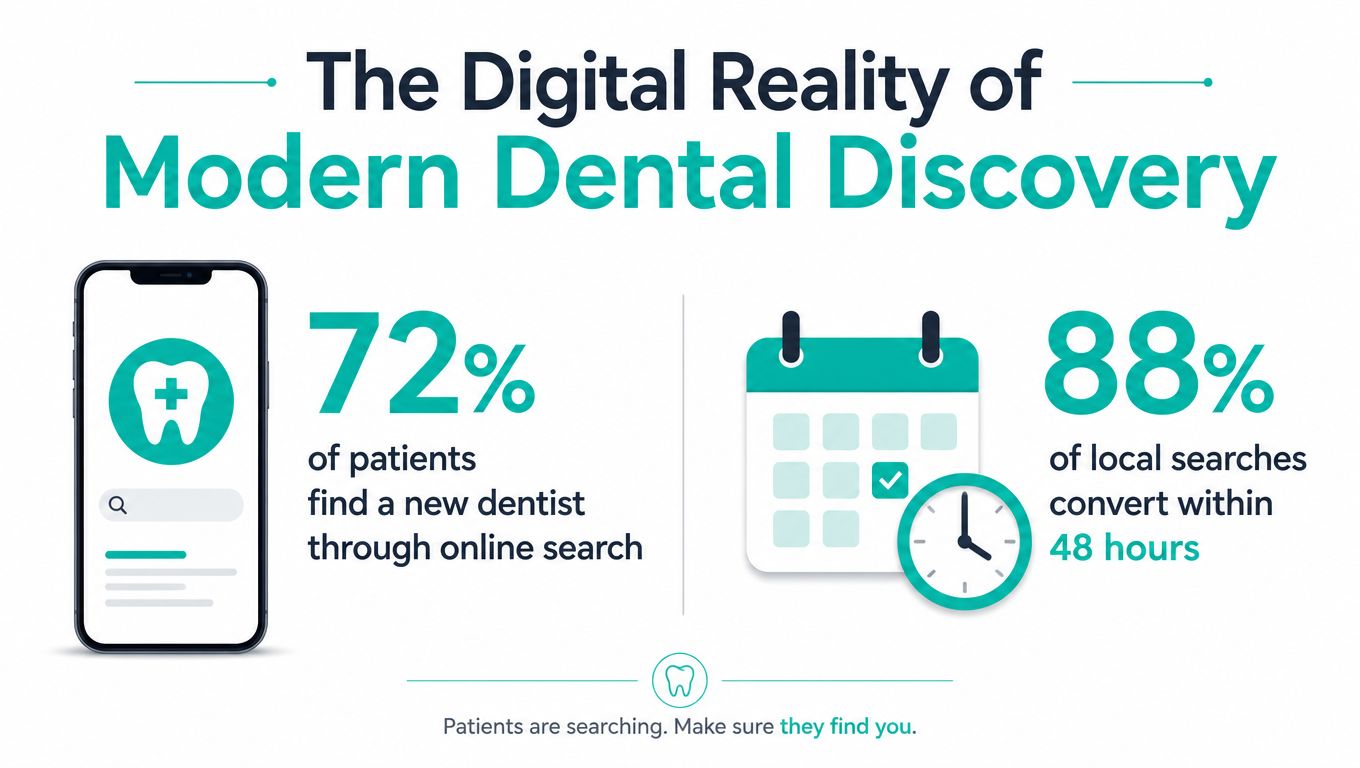
The numbers make the shift difficult to ignore. 71% of people search online before booking a dental appointment, 69% search online before scheduling, and 86% contact a dentist after an online search, according to dental marketing statistics from Click Vision. The same source reports that 93% of online experiences begin with a search engine and that more than 70% of consumers research dental treatments online before choosing a provider.
Why traditional advertising falls short
A billboard can create awareness, but it can't answer whether you accept a patient's insurance, offer emergency appointments, or have an opening this week. A radio spot can make your name familiar, but it can't immediately show treatment information, reviews, directions, and a booking button.
Search captures a different kind of attention. Someone looking for “emergency dentist near me” has a different need from someone researching veneers, and both differ from a parent looking for a family dentist. A single generic campaign treats all three as the same buyer. That is how practices generate inquiries that don't match their services, budget, schedule, or clinical priorities.
Your marketing should reflect the way the patient thinks:
- Emergency intent: Make your availability, phone number, location, and response expectations obvious.
- Routine care intent: Explain insurance, new-patient processes, family services, and online scheduling.
- Cosmetic intent: Show credible treatment information, consultation steps, financing details, and authentic outcomes.
- Treatment research intent: Answer concerns clearly before asking for a booking.
Digital discovery also creates an operational challenge. A campaign can produce calls while your team misses them, delays follow-up, or sends patients through a complicated booking process. A practical resource on handling dental patient flow can help connect marketing activity with the front-desk systems that determine whether interest becomes an appointment.
A local practice also needs marketing that reflects its actual community, not a template written for every dentist in the country. If you're comparing broader positioning and local strategy support, review this Boise marketing agency resource as part of your planning process.
Mastering Local Search and Google Business Profiles
A Google Business Profile is often the first practical test a prospective patient gives your practice. From one listing, they can call, request directions, read reviews, check hours, and reach your website without opening the homepage. Treating it like a static directory wastes a high-intent opportunity.
Google Business Profile ranks as the top new-patient channel for 15.6% of practices, according to MouthWatch's dental practice marketing resource. Keep your website and advertising active, but give the profile the same attention as a treatment landing page. It must answer the patient's immediate question and make the next action easy.
Build the profile around patient decisions
Start with accuracy. Confirm the practice name, address, phone number, hours, holiday closures, appointment link, service categories, and locations. An incorrect “open” status can send an urgent patient to a locked door. A booking link that leads to a generic contact form creates another reason to leave.
Then make the listing useful:
- Use real photography. Show the exterior, reception area, treatment rooms, equipment, and team. Stock images give patients no clear sense of the visit or the people providing care.
- Describe services plainly. Use patient language for emergency dentistry, implants, clear aligners, pediatric care, whitening, and other priority treatments. Repeating every possible keyword makes the profile harder to read and less credible.
- Publish answers, not filler. Cover parking, insurance, new-patient appointments, same-day needs, accessibility, and what patients should bring.
- Request reviews consistently. Ask for honest feedback after appropriate visits. Respond professionally without exposing protected information.
- Test the mobile journey. Call from the profile, open the map, visit the website, and follow the booking flow on a phone. Fix every broken or confusing step.
Local SEO depends on agreement between the profile and the website. Keep addresses, services, hours, and contact details consistent across important listings. Use this guide to how to rank dentists locally for execution advice, not secret ranking tricks.
Match the profile to the buyer's timing. An emergency patient needs immediate contact and availability. Someone considering cosmetic treatment may respond to clear consultation details, credible outcomes, and seasonal relevance, such as increased interest before major events. A generic profile serves neither patient well.
Your website should provide the depth the listing cannot. Create focused pages for priority treatments and locations, link them clearly from navigation, and make one next action obvious. A dental marketing service overview can help you assess how local search, website content, and conversion paths work together.
Paid Advertising Strategies That Actually Fill Chairs
Paid advertising works when it captures a specific need and sends the patient to a page built for that need. It fails when a practice buys broad exposure, sends every click to the homepage, and measures impressions instead of booked appointments.
Search advertising usually deserves priority for urgent and treatment-specific demand. Someone searching for an emergency dentist, implant consultation, or clear aligner provider has already identified a problem or goal. Social advertising can support awareness and cosmetic demand, but it often interrupts the user's activity instead of responding to an immediate request. Use it to introduce a treatment, demonstrate expertise, or retarget a qualified visitor, not as a substitute for high-intent search coverage.
Match the page to the procedure
The conversion gap between a generic website and a focused destination is substantial. A dentist conversion benchmark from CUFinder reports that a typical dental website converts about 2% to 5% of visitors into a booking action, while dedicated landing pages convert about 12.5% and call-only ads about 18.2%. Based on those figures, aligned offers, calls to action, and tracking can produce roughly 2 to 6 times more leads from the same traffic volume.
That benchmark is useful because it exposes a common waste of money: sending a patient searching for dental implants to a homepage that lists every service. Build a page that answers the exact question behind the search:
- What does the treatment solve?
- Who is a candidate?
- What happens during the consultation?
- What does the practice need from the patient?
- How can the patient call or book immediately?
Track a booked appointment, completed form, or phone call lasting more than 60 seconds as a meaningful conversion. Form submissions alone undercount dental leads because many patients prefer to call, especially for urgent care.
Allocate budget by intent, not demographics
Demographics can help with creative decisions, but procedure intent should lead your campaign structure. Separate emergency, general dentistry, implants, orthodontics, and cosmetic services so each group receives relevant copy, landing pages, exclusions, and follow-up.
Don't pay to advertise services your team can't schedule promptly. Don't promote a discount that attracts patients seeking a treatment you don't want to provide. Don't keep an ad running just because it receives clicks. Ask whether the campaign produces qualified conversations and booked visits.
For help evaluating campaign structure, landing pages, and tracking options, review these marketing services for dental practices and compare them against the actual gaps in your office.
Turning Attraction Into Trust With Reviews and Content
A click proves curiosity. A booking proves trust.
Independent 2026 coverage reports that 97% of consumers read online reviews, and that a growing share of consumers will contact only businesses with ratings of 4.5 stars or higher, according to Dental Practice Insider's marketing coverage. Reviews are not decoration on your profile. They help patients decide whether your practice feels safe, competent, responsive, and suitable for their needs.
Create a review system patients can believe
Ask for honest feedback at a sensible point in the patient experience. Keep the request simple, make it easy to respond, and never pressure patients to write a positive review. Your team should respond to criticism without discussing clinical details publicly. A thoughtful response can show future patients that the practice listens, while a defensive response can validate their concerns.
Review volume alone won't repair a weak patient experience. If patients complain about unclear bills, long waits, difficult scheduling, or unanswered calls, address those operational issues before increasing review requests. Marketing can't permanently hide a broken front desk.
Content works alongside reviews by answering questions before the appointment. A patient researching a root canal may worry about discomfort, duration, cost, recovery, or whether treatment can wait. A clear page or short video can explain the process, set expectations, and help the patient decide whether your practice is appropriate.
Useful content should be specific:
- A root canal page that explains evaluation, treatment stages, and follow-up.
- An Invisalign page that describes consultation, candidacy, and monitoring.
- An emergency page that distinguishes urgent symptoms from routine concerns.
- An insurance page that explains accepted plans and how benefits are checked.
Paid ads can amplify the pages that already answer real patient questions. Organic search can keep those pages working after an advertising campaign ends. Together, reviews create social proof and content reduces uncertainty, which is far more valuable than publishing generic posts no patient reads.
Practical rule: If a page doesn't help a patient choose, understand, or book a service, it isn't a lead-generation asset yet.
The Hidden Power of Patient Retention and Referrals
Your existing patient base already understands your care, staff, location, and experience. That makes retention and referrals more valuable than many cold-audience campaigns, provided your communication remains useful and your referral process follows the rules in your state.
Start with patient segmentation. A hygiene patient shouldn't receive the same message as someone who asked about implants. Patients who haven't returned may need a convenient recall reminder, while patients who completed cosmetic treatment may be interested in maintenance or related services. Segment by relationship and likely need, not by a vague “all patients” list.
Turn follow-up into a reliable operating process
A practical retention system includes:
- Post-visit follow-up: Check whether the patient has questions and provide appropriate next steps.
- Recall communication: Remind patients about preventive care through approved channels.
- Unfinished treatment follow-up: Contact patients who began an inquiry or consultation but didn't schedule, while respecting consent and privacy rules.
- Referral education: Tell satisfied patients how friends or family can contact the practice without making exaggerated promises.
- Availability messaging: Highlight legitimate openings or seasonal services only when the team can handle the response.
Online scheduling deserves special attention. A peer-reviewed 2025 study reported a 1.8% no-show rate for online-booked visits, compared with 5.9% for offline-booked visits, as summarized in this dental online scheduling resource. The operational lesson is straightforward: offer immediate self-booking when possible, then make the appointment details and reminders clear.
Make referrals useful, not risky
Referral programs can create legal problems when a practice offers incentives without checking state rules. The ADA notes that some states have specific requirements for contests and referral thank-you gifts, so get legal guidance before launching any reward structure. A simple, compliant referral explanation may be safer than a promotional program built around aggressive incentives.
Your highest-intent pages also support retention and referrals. A dedicated service page gives an existing patient a useful destination to send to a family member or colleague, instead of forcing that person to search through a generic website. Keep the page accurate, easy to share, and connected to direct booking.
Legal and Ethical Guardrails for Dental Marketing
A lead is not valuable if the campaign creates an ethics complaint, privacy issue, or reputation problem. Dental marketing must persuade without overstating clinical outcomes, hiding material conditions, or treating patient information as ordinary advertising data.
The ADA states that advertising or soliciting patients is prohibited when it is false or misleading in any material respect. Claims must be truthful, non-deceptive, and supported by evidence, and testimonials or endorsements must reflect the endorser's actual opinion and experience while disclosing any material connection to the practice, according to the ADA's marketing and advertising guidance.
Review every claim before publication
Avoid guaranteed outcomes, unsupported superlatives, misleading before-and-after presentations, and language that implies every patient will receive the same result. If you use a patient story, obtain appropriate permission and ensure the presentation doesn't create a false impression about typical treatment.
The ADA's legal and ethical advertising guidance also advises practices to check state dental practice acts and state advertising rules before marketing online. State requirements can apply to claims, testimonials, contests, referral gifts, and other promotional tactics, regardless of whether the message appears on a website, search ad, review profile, or social platform.
International guidance matters too when a practice serves patients across borders or follows broader professional standards. The FDI advertising guidance says dental advertising should be accurate, factual, balanced, and professional. It also warns against manipulating search results or online reviews and using patient testimonials without appropriate consent and verification.
Protect follow-up communications
Email and text follow-up can improve booking, but it can also expose protected health information. For patient messages containing PHI, dentists should use secure messaging or encryption, or obtain consent for unencrypted communication. The ADA guidance summarized by DentistryIQ's HIPAA communication rules also states that signed consent should be obtained before calls or texts in many situations.
Keep marketing and care communication distinct. Limit message content, control access to patient data, document consent, and give patients a clear way to stop communications. Ask your compliance counsel and technology vendors how forms, call tracking, texting, CRM systems, and appointment data are handled before connecting them.
Building Your 2026 Lead Generation Roadmap
A full appointment book does not come from more clicks. It comes from matching the right patient, treatment, message, and booking path at the right time. Build your roadmap around that sequence, then remove the points where patients hesitate, abandon the process, or receive a message meant for someone else.
A practice with unused emergency capacity needs a different plan from one building a cosmetic pipeline. Start with an accurate local profile, a clear emergency page, call tracking, fast response procedures, and booking access outside normal office hours. Cosmetic services need treatment-specific pages, credible reviews, consultation messaging, and campaigns scheduled around periods when demand usually rises. Your appointment history should decide which treatments, neighborhoods, and periods receive more attention.
Phase one: audit the patient journey
Search for your practice by name, treatment, and location. Test the phone number, booking link, forms, directions, and mobile pages. Check whether a new patient can understand your services and book without calling the front desk for basic information.
Call the practice yourself. Record how long the phone rings, whether staff answer consistently, and what happens when nobody picks up. A campaign cannot fix a booking process that loses inquiries before they reach your team.
Phase two: build around patient segments
Choose the groups your practice can serve well, then give each group a relevant route to care. Create distinct pages and campaigns for emergency dentistry, general care, family dentistry, implants, orthodontics, and cosmetic services where those treatments fit your capacity.
Generic funnels attract mixed intent. They also force staff to qualify patients manually and leave high-value prospects with vague answers. Match the page, offer, proof, and call to action to the patient's likely concern.
Phase three: earn and use trust
Request honest reviews through a consistent process. Publish direct answers to real treatment questions, show what a first visit involves, and train staff to respond clearly to inquiries. Trust must continue from the search result through the consultation.
A campaign cannot compensate for unanswered calls, unavailable appointment times, or unclear fees and next steps.
Phase four: measure booked outcomes
Track calls, forms, online bookings, attendance, treatment type, and lead source. Review the quality of each lead, not only the total volume. Fewer inquiries can produce better results when they fit your services, schedule, and clinical focus.
Use identify dental clinics online for competitive research. Compare service positioning, local visibility, reviews, and booking paths. Do not copy competitor claims. Find gaps your practice can fill credibly.
The waste is clear: broad ads without treatment pages, outdated listings, stock photography, untracked calls, generic content, and referral incentives launched without legal review. Prioritize accurate local information, segmented pages, direct booking, honest reviews, compliant follow-up, and weekly review of what happens after each lead arrives.
Leaping Lemur Media provides local SEO, Google Business Profile optimization, Google and Meta advertising, conversion-focused website development, call attribution, and new-patient tracking. Visit Leaping Lemur Media to discuss a strategy based on your services, community, and schedule.